
Kent City Directory Collections Across Years
Kent's deepest historical shelf sits at Kent State University Special Collections and Archives. It is not a single all-purpose database. The chronological telephone-directory collection holds local and regional volumes. Confirmed Kent entries go back to 1921. Other Kent records sit nearby, yet each answers a different question. A university list can document a campus connection. A yearbook can place someone in a cohort. A newspaper can help date an event. Treat every item as evidence from its own edition. It is not a complete roll of all Kent residents.
| Collection | Years | Where Held | Access |
|---|---|---|---|
| Portage County, Kent, and Ravenna Telephone Directories | 1918-2020 | KSU Special Collections, 11th floor | Physical archival collection, arranged by date |
| Kent city and telephone volumes | Confirmed 1921 and later dated volumes | Within the KSU directory collection | Inspect the exact edition and page |
| KSU Directories | 1931-2009, with gaps | KSU Special Collections | Faculty, staff, and student material only |
| Digital Chestnut Burr | 1914-1985, except 1920 | KSU online | Searchable and available to read or download |
| Kent Tribune | 1917-1929 | Ohio Memory | Digitized newspaper route |
The finding aid describes the telephone run as five cubic feet. It sits on the 11th floor, aisle 83 E 3-5. Inside are Portage County Telephone Company materials from 1918. Later volumes cover Kent, Kent-Ravenna-Mantua, and Portage listings. Not every volume is digitized. Not every volume carries a reverse, address-ordered section either. That matters when a name or address turns up missing. The KSU telephone-directory finding aid lays out the local collection route.
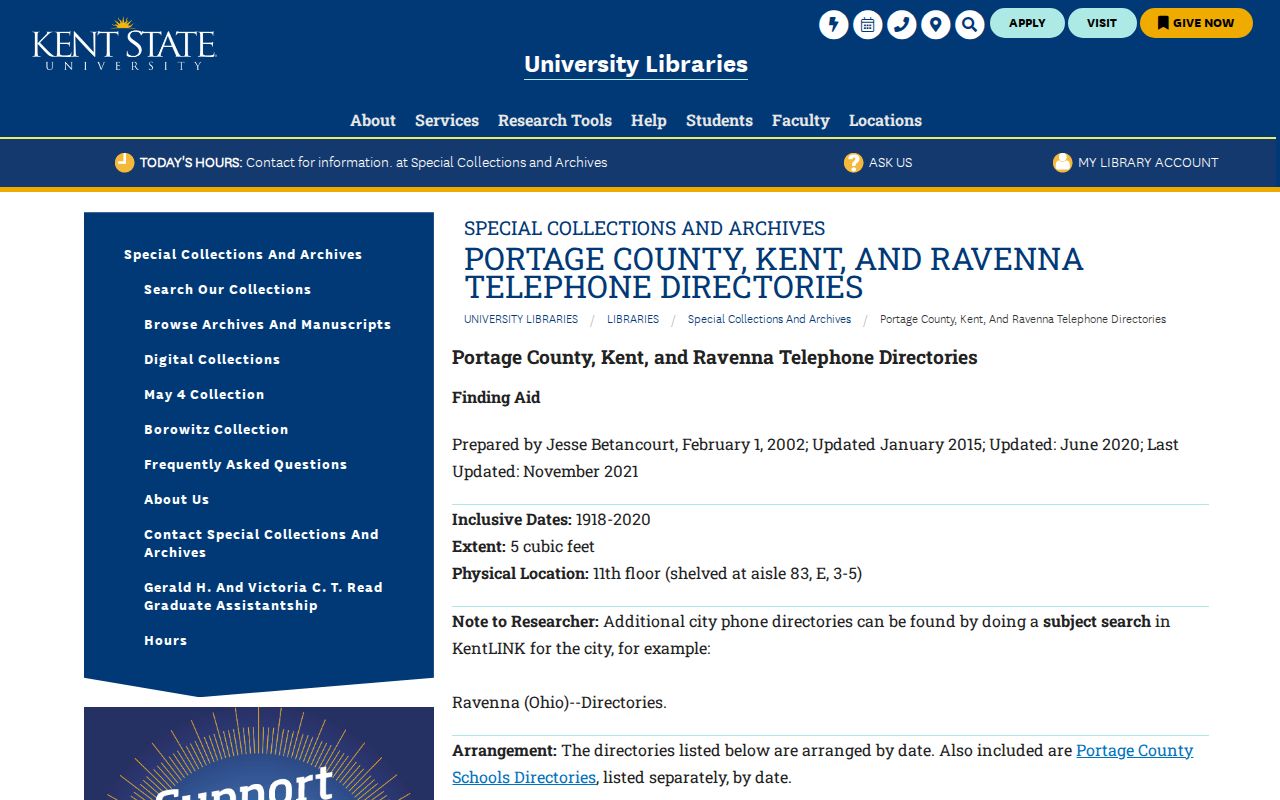
Let the collection description lead you to a dated volume, then cite the edition and page rather than mistaking the finding aid for the listing itself.
Kent Telephone Directory Shelf
A Kent resident lookup usually starts at the telephone shelf. KSU calls the collection chronological. The library points researchers to the KentLINK catalog by city subject for more local directories. Dated contents include a Kent City Directory from 1921. An Ohio State Telephone Company Kent Directory is dated January 1921. Another Kent Directory appeared that March. Later volumes cover Kent-Ravenna city directories from 1955, 1957, and 1976 through 1979. Portage telephone listings run from 1996 through 2017. The shelf also holds a 2020 business list.
Insider tip: a catalog result starts the request; it does not prove a scan exists. Ask Special Collections about the exact volume, handling conditions, and access route. A counter or archive consultation is the documented fallback for any unscanned Kent city directory.
Note: Record the exact title on the spine or title page. Publisher names and coverage shift across the run.
Kent City Directory Entries Need Care
Treat a Kent city directory entry as a dated transcription. The KSU finding aid supports only a careful inventory. It lists the printed surname and given name or initial, the street address, a telephone number or exchange where present, and any separate business listing. Copy abbreviated street forms and punctuation exactly. Special Collections publishes no readable sample page or uniform abbreviation key, so assigning meanings to symbols before seeing the volume would be unsafe.
| Printed name | Transcribe the surname and given name or initials as the edition gives them. |
|---|---|
| Street address | Keep the street spelling, number, and abbreviations from that dated listing. |
| Telephone detail | Note the number or exchange only if the particular directory prints one. |
| Separate listing | Record a business or residence designation only when the page actually labels it. |
| Edition marker | Preserve the year or issue date that fixes the entry in time. |
- Criss-cross directory
- An address-ordered section, when a particular volume includes one, that can be checked against a name listing.
- Householder index
- An index arranged around a household or address instead of solely by a personal name; its coverage depends on that publication.
- Abbreviation key
- The explanatory list printed by some volumes. Photograph or transcribe it from the same edition before interpreting a code.
Kent Campus Directory Limits
The KSU Directories collection spans 1931 through 2009 and holds faculty, staff, and student directories. Most volumes list on-campus addresses. Later issues may add telephone numbers. Early student directories often give only a hometown instead of a full home address. Several 1930s years are absent. 1998-1999 is missing. Some years carry addenda that correct, add, or remove names.
These are powerful time-stamped Kent directory records for a university connection. They are not a citywide resident list. A name in a campus directory supports the affiliation and year printed there. Pair it with a deed, census, telephone listing, or other source. Make no address claim beyond the volume. The KSU directory collection describes the campus-focused run and its gaps.
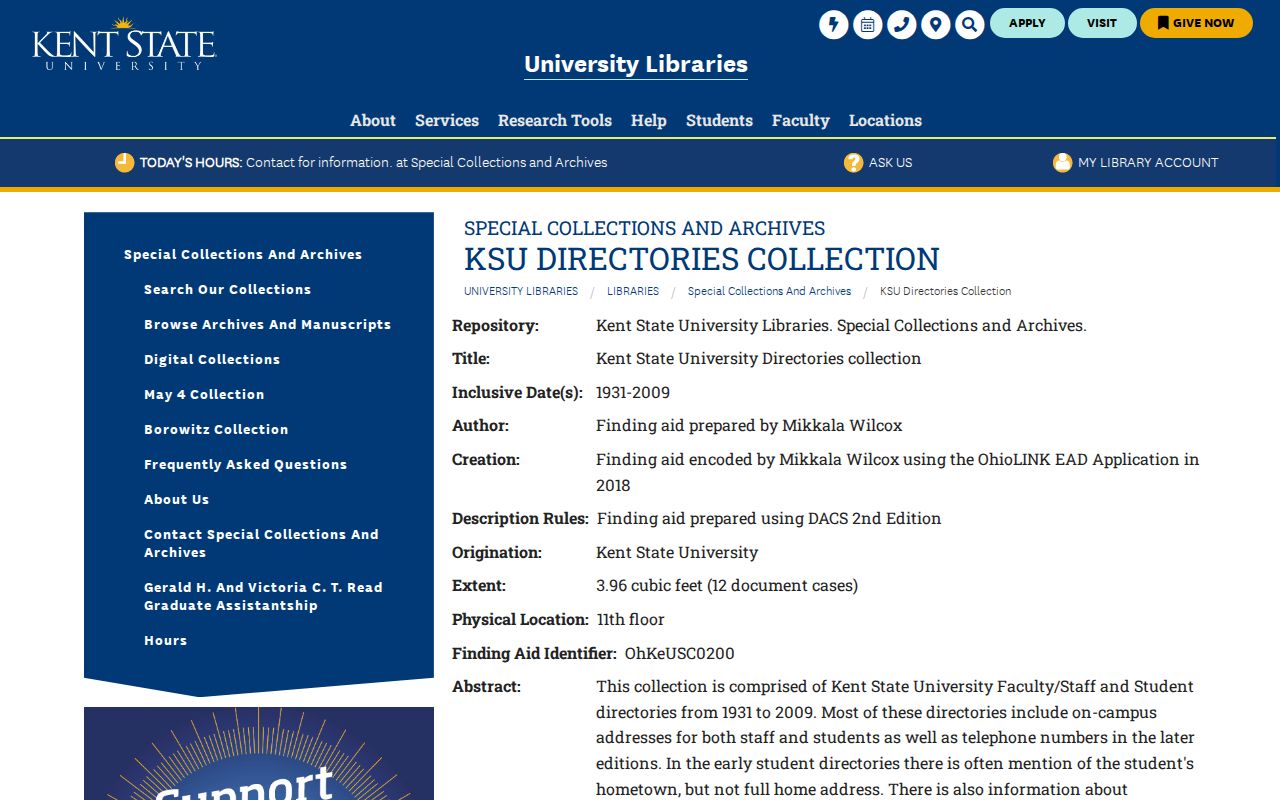
The collection page answers a call number or access question, while the dated volume remains the evidence for a name.
Kent City Directory Companions
When a telephone directory runs thin, Kent keeps companion collections that answer narrower questions. The Digital Chestnut Burr lets you read or download Kent State yearbooks from 1914 through 1985. No 1920 volume exists. Search it by name. It gives class and campus context, not proof of a home address. KSU also holds Woman's Club of Kent directories and yearbooks from selected years between 1923 and 1942. The holdings include a 1921 Kent High School Alumni Directory, Portage County school directories from 1956 to 1960, and a 1915-1920 farmer's directory.
These community sources are voluntary or population-specific. They help establish a dated connection, a spelling, or a social setting. Absence from them is never a negative finding. For death notices and address-adjacent announcements, Ohio Memory's newspaper directory identifies the digitized Kent Tribune run. The run covers 1917 through 1929. The Digital Chestnut Burr collection supplies the yearbook access route.
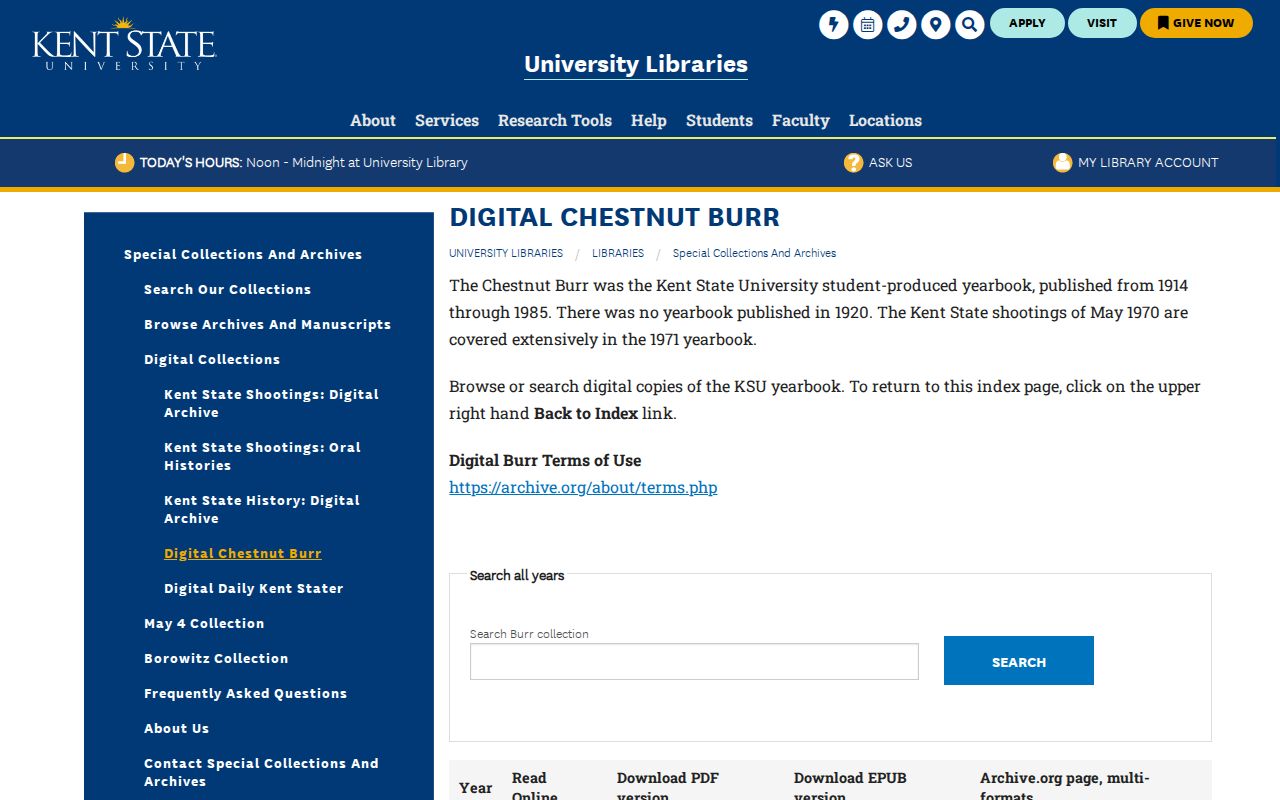
A yearbook can support a dated school connection, while a directory, census, or recorded document answers the separate address question.
Kent City Directories in Household Trails
Treat each Kent city directory as a dated stop, not a continuous story. Build from a known parcel or legal description. Then work the Recorder's title chain. Request the directory volume closest to each transfer or change year along the way. Federal census releases currently reach only 1950. A census fixes a household at its enumeration date, while a directory captures a listed subscriber at the edition date, so the two record types complement each other without saying the same thing.
- Find the earliest reliable appearance of the name or address in a dated Kent volume and transcribe it exactly.
- Check later available editions, preserving the address, phone detail, and spelling each time instead of normalizing them.
- Use an address or criss-cross section only when the exact volume contains one.
- Pair each directory date with the nearest public census, a deed, and, where useful, the 1889 or 1919 Sanborn map.
- Keep a mismatch in the research log and test street changes, prior surnames, and the earlier locality names before joining records.
For current address-keyed records, the separate Kent street address directory follows the Auditor, GIS, and Recorder trail. A name can vanish from a city directory for many reasons. The move may be real, or the listing simply unlisted. A collection gap or a changed name can also explain it, so never turn a disappearance into a conclusion without another dated source.
Kent Locality Names Matter
Myth: every older Kent record sits catalogued under Kent. The community was known as Carthage and Franklin Mills before the documented 1863 change to Kent. It incorporated in 1867. Early catalogues and newspapers can carry any of those names. So search all three when a directory, clipping, map, or historical record seems to be missing.
Street wording needs the same care. The Recorder's legal description can bridge a changed street label. A directory or map should keep the contemporary wording. The City street-change table documents the 1935 Normal Avenue to University Drive change. It also records the 1977 State Route 59 relocation tied to Haymaker Parkway. Preserve the older address first. Add a modern equivalent only when it is independently documented.
Note: A historical place name or street spelling is a search key, not an error to rewrite silently. A search term is what it is.
Kent Directory Archive Counter Routes
The Kent Historical Society and Museum is another local route when a directory alone does not answer the question. Its archive description lists diaries, letters, family Bibles, limited probate material, deeds and wills, business and civic records. Church material, school rosters, maps, and clippings round it out. Find it at 237 E. Main Street. It is open Friday and Saturday, 10 a.m. to 2 p.m. The Society reports a complete Kent Good Times Dispatch run for 1952-1978, plus most Kent Weathervane and Kent Forum issues from the 1980s.
KSU, the Kent Historical Society, and the Portage County Historical Society form different fallback routes. KSU leads for university collections, maps, campus publications, and its directory shelf. Kent Historical Society stays City-centered. The Portage County Historical Society describes countywide original tax, probate, marriage, cemetery, poll-book, obituary, diary, and surname resources. Many predate the directory era.
The Kent Historical Society collections page introduces its holdings.
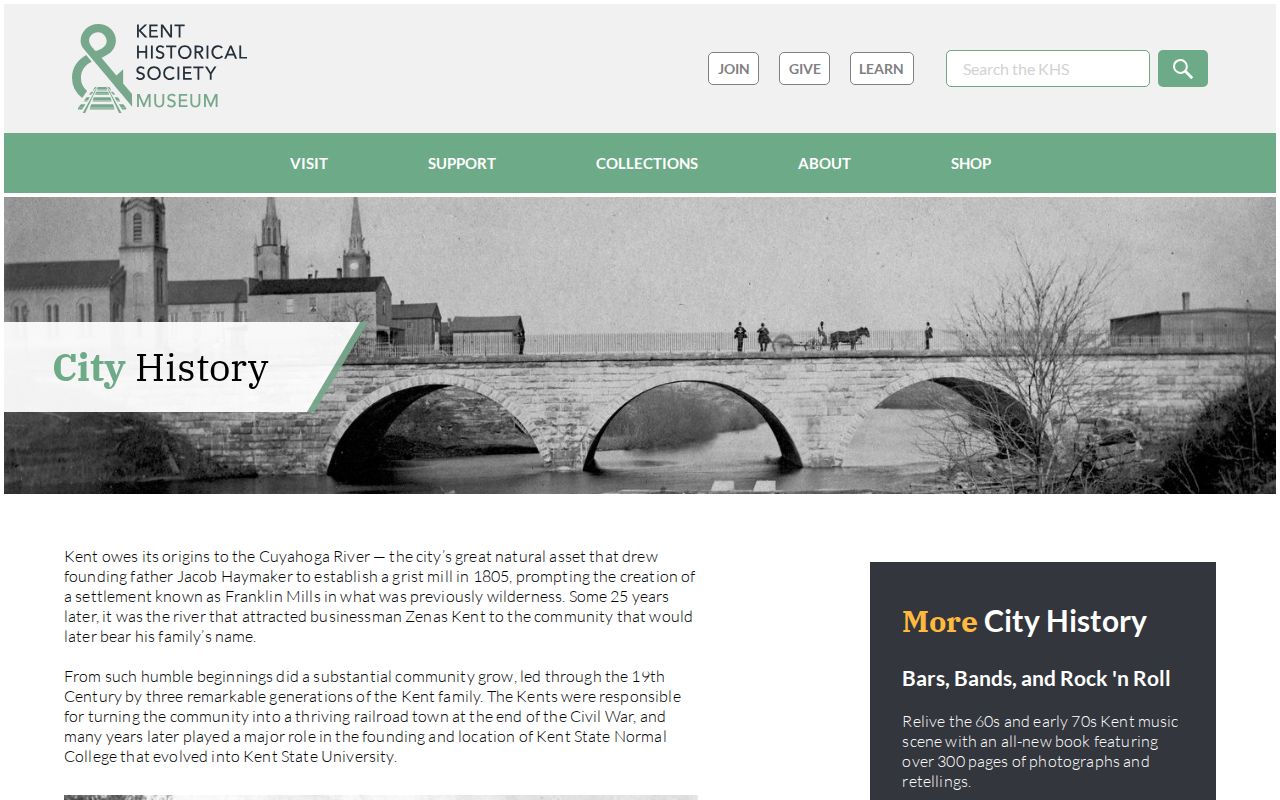
A custodian can settle a question in minutes. Ask about a named collection or date range, since an online description never promises a digitized page or a full-name index.
Kent City Directory Access Changes
KSU announced a discovery-system upgrade for 2025 and 2026. Saved links can break even though the collection survives. Recheck the current catalog and the archive or manuscript search route before treating a dead bookmark as a missing Kent city directory. The library's own search guide separates archival and manuscript discovery from the book and periodical catalog. Both routes can serve a local-history search.
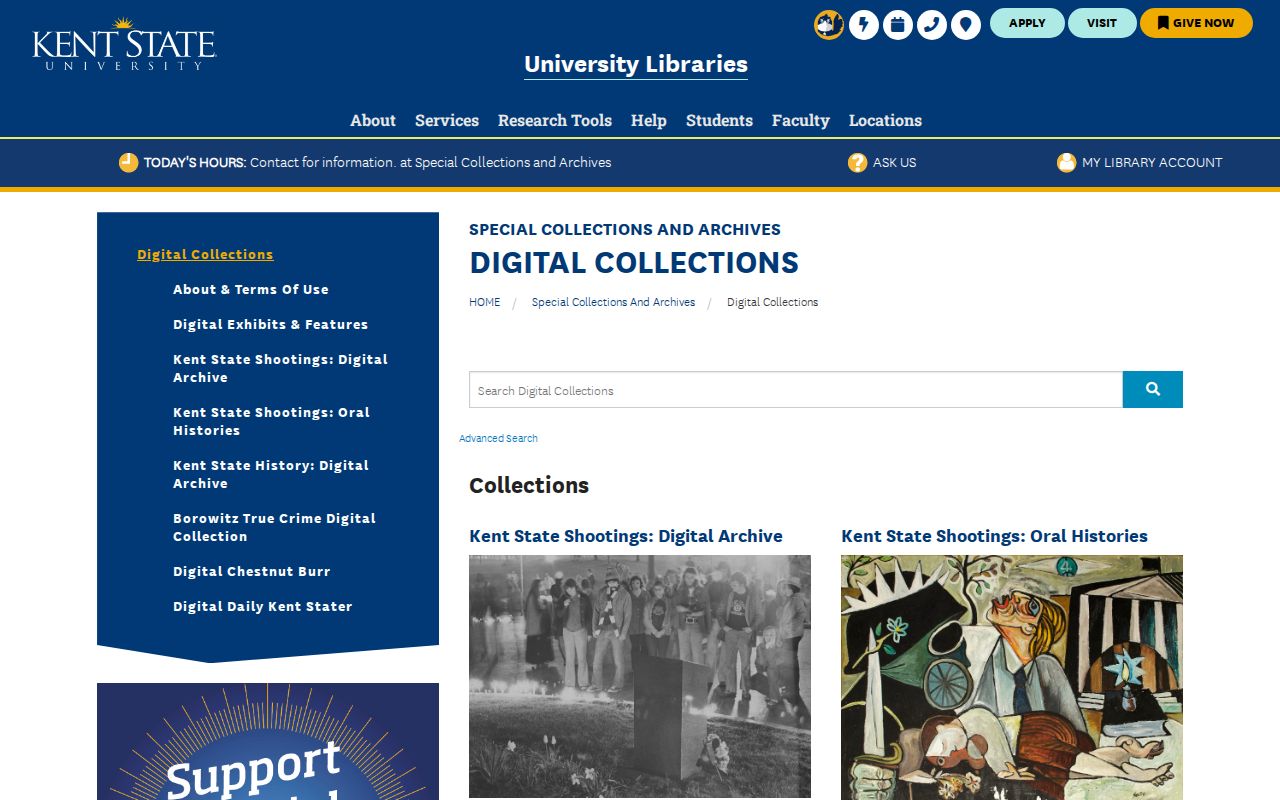
KSU's digital special collections add photographs, maps, University history, May 4 material, and oral histories. These help place a location or event in context. A photograph collection is not a directory, though. Pair it with the right dated record for the question at hand. The KSU digital special collections offer a current online discovery path.
Record the exact title, date, and repository. That note makes a future Kent directory search easier to reproduce along the same collection route.